DAY 1 – Theories and Optimization of Diffusion Models
1.1 — Fundamentals of Diffusion Models
* Review of previous generative approaches: Generative Adversarial Networks (GANs) & Variational Autoencoders (VAEs)
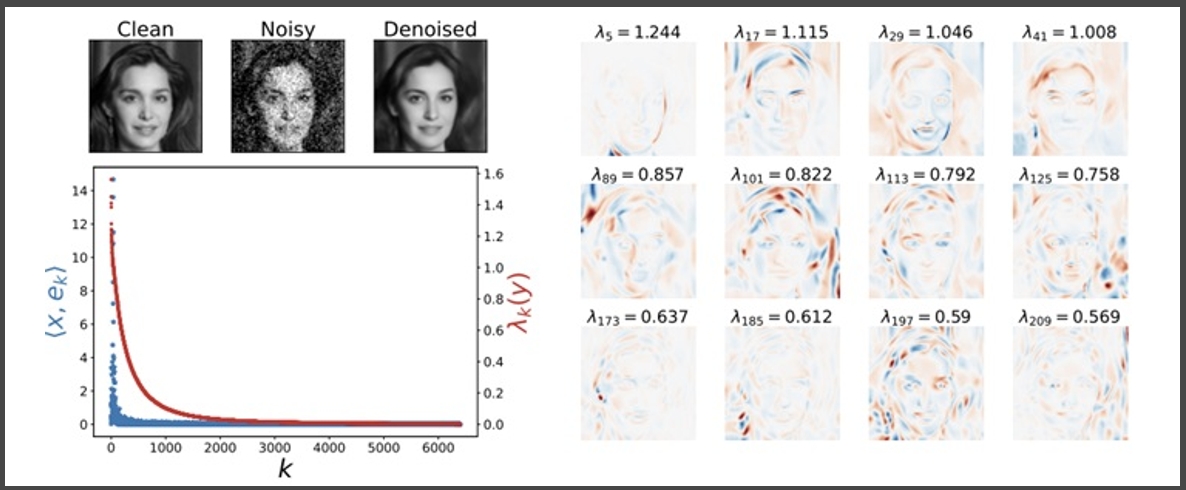
* Early work (Sohl-Dickstein, 2025) on diffusion. Mapping a target distribution to a controlled distribution
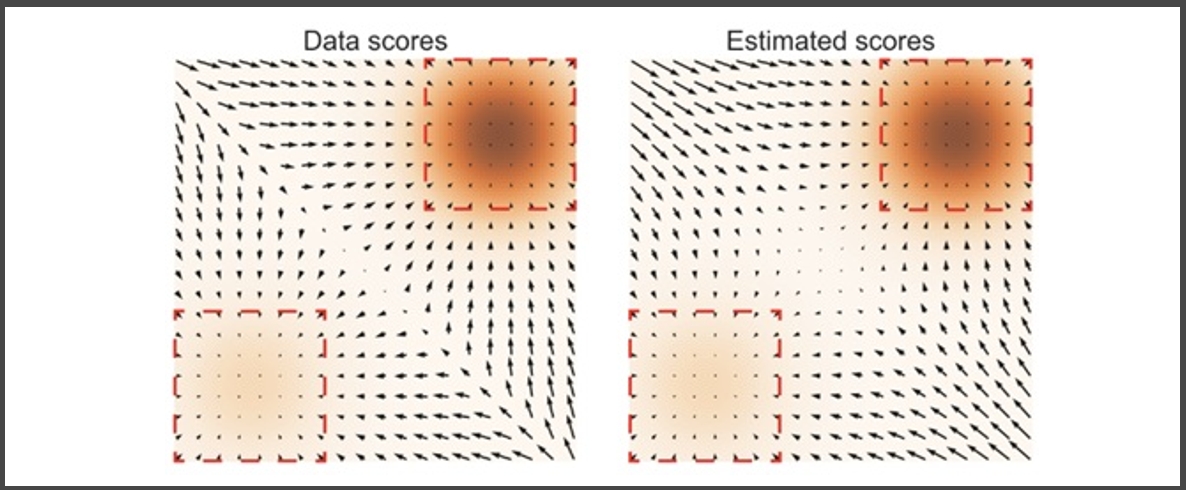
* Learning the gradients of a distribution? More efficient modeling of a generative model.
1.2 — Pioneering Work in Broadcasting
* Fundamental approach by Ho et al. (2020): modeling forward/backward processes for training the generative model. Modeling using Gaussians, loss function, and reformulation as a denoising process.
* Fundamental approach by Song et al. (2021): linking denoising and “score matching.” Fundamental review of ordinary and stochastic differential equations for modeling diffusion.
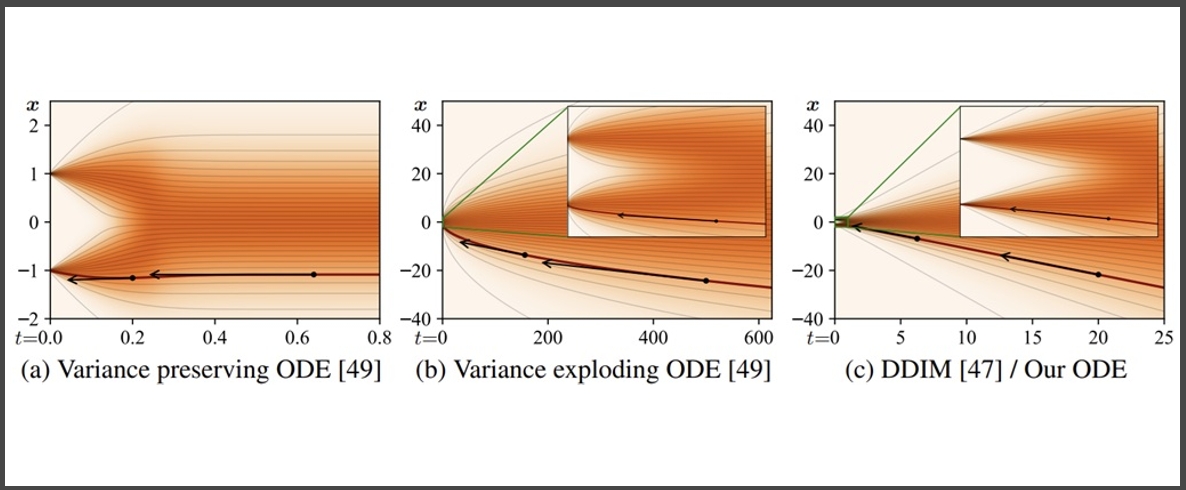
* Analysis of the “Variance Exploding” (VE) and “Variance Preserving” (VP) variants of diffusion.
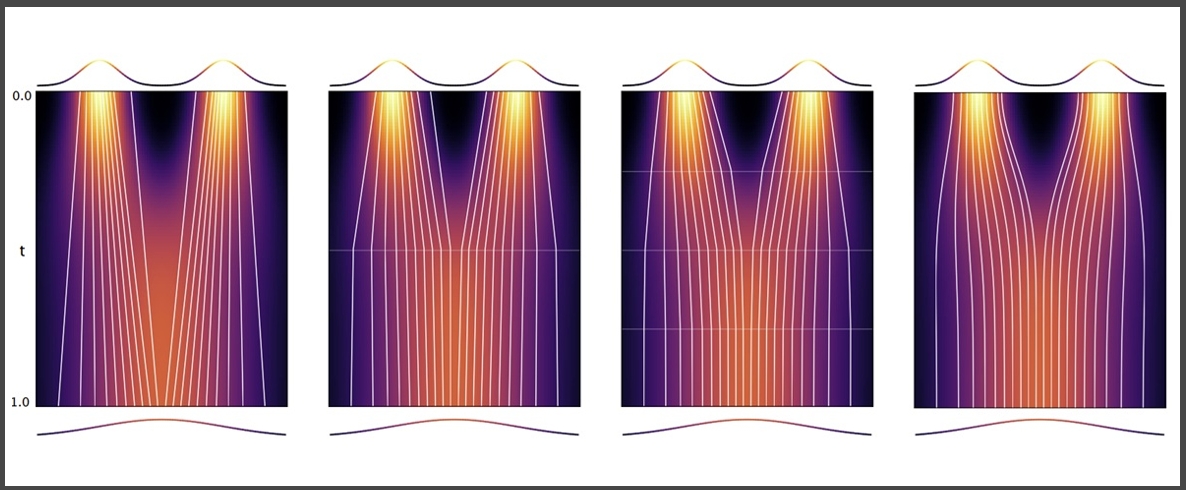
* Explanation of the “Probability Flow ODE” as a solution within the general approach. Key benefits of this approach (latent vector modeling)
* Presentation of “Denoising Diffusion Implicit Models” (DDIM): a non-Markovian approach and a better approximation of the desired solutions
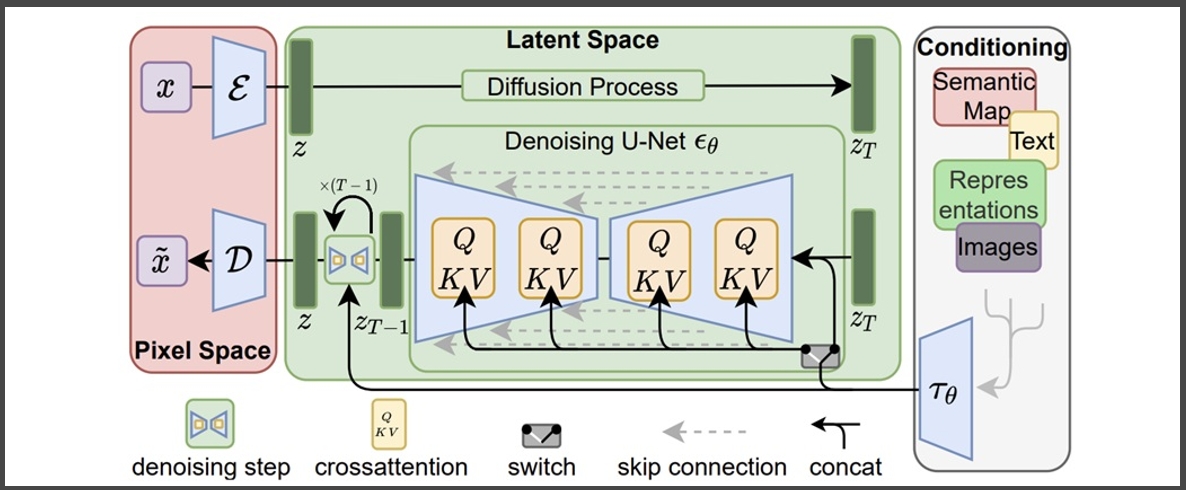
* Use of latent vectors in diffusion: the approach by Rombach et al (Stable Diffusion). Separation of the image encoding and diffusion problems. Model control axes via condition injection. Overview of applications.
1.3 — Better Understanding and Modeling
* Review of the work by Karras et al. (NVIDIA, 2022) on the design space for diffusion models. Overview of the proposed analyses
* Rewriting the diffusion model by Karras et al.: review of existing approaches (VE/VP/DDIM). Problem decomposition and observed learning gains.
* A brief review of the reformulation of “Variational Diffusion Models” (Kingma, 2021). An introduction to diffusion as an extension of the classical VAE.
1.4 — Optimization of Diffusion Models
* Highlighting the inherent computational complexity of a diffusion model during inference.
* Introduction to distillation for a diffusion model. An iterative approach to reducing the number of “steps” in the generation process. Formulating objectives in terms of signal-to-noise ratio. Limitations of the approach and results obtained.
* Introduction to “Consistency Models” (CM). Challenges of rapid generation through consistency along the “Probability Flow.” Comparison of approaches (distillation of a classical model or direct training). Applications to inverse problems
* Multistep Consistency Models: an intermediate approach between CM and diffusion models. Achieved optimizations and application limitations.
DAY 2 – Applications and Understanding of Dispersion Models
2.1 — Applications of Diffusion Models
* Diffusion Models and Large Language Models? Overview of major challenges in application (discrete space) and key advantages (one-shot generation rather than autoregressive). Analysis of solutions found in the scientific literature (notably: Large Language Diffusion Models). Overview of Gemma Diffusion (Google). Outlook for the evolution of the LLM/Agentic landscape over the coming year.
* Diffusion models and images or video: presentation of applications beyond generative models. Approaches to generic inverse problems and the ability to adapt to specific problems. Use of diffusion models in anomaly detection: challenges and known limitations of the approach. Overview of applications in segmentation and depth estimation, as well as in control problems. Details on the Low Rank (LoRA) and ControlNet approaches.
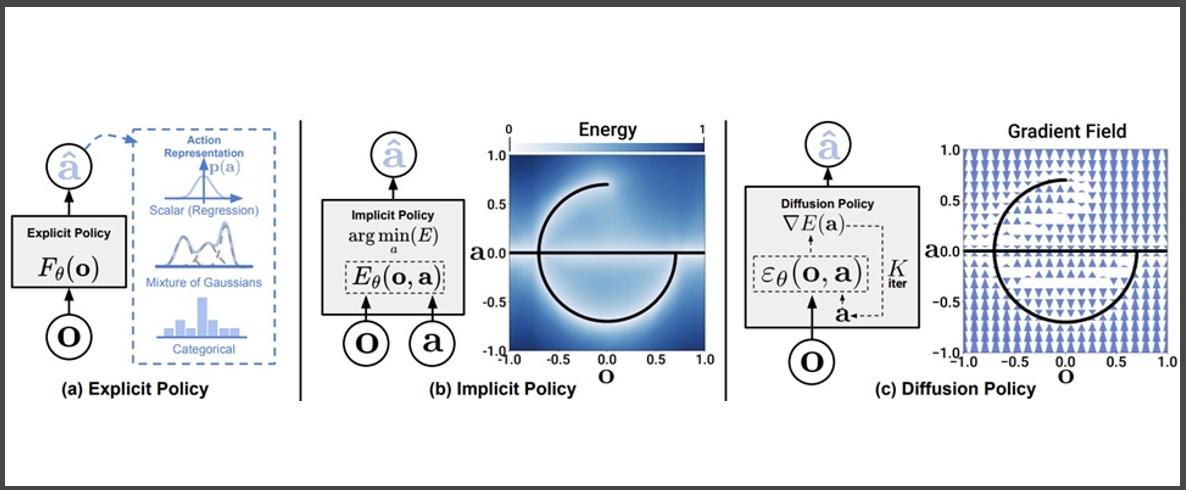
* Diffusion Models and Robotic Control: Focus on the application of these models in control via Diffusion Policies. The benefits of enhanced generalization and effectiveness in “Imitation Learning”
2.2 — What happens in a diffusion model?
* Diffusion models & model inversion: examples of generating dataset elements from the model. An overview of diffusion model security.
* Why does a diffusion model generalize so well? A review of research and current understanding, including “Geometry-Adaptive Harmonic Representations” (strong generalization on a convolutional architecture), adaptation to Transformer architectures, and recent work on learning strong biases from the dataset.
* “General Theory of Diffusion Models”: analysis of a model’s “creativity” (work by Kamb et al., 2025) and connections to physics in understanding diffusion dynamics.